


Rusty Lake Paradise
Rusty Lake
I first approached Rusty Lake Paradise as a quiet puzzle game for short evening sessions, but it quickly became the sort of experience I wanted to discuss with someone else in the room. It is an adventure game built around point-and-click exploration, strange objects, unsettling imagery, and puzzles that ask you to notice connections rather than react quickly. That makes it especially interesting on a shared device: one person can hold the phone while another watches, suggests ideas, and tries to remember details.
That shared-use quality is not the same as being a family game. The atmosphere is dark, the subject matter can be disturbing, and the Teen content rating matters when deciding who should see it. I would recommend it to players who enjoy eerie mysteries and careful observation, but I would not casually hand it to a young child just because the controls are simple. My experience with the game was strongest when I treated it as a compact mystery to solve together, not as a harmless distraction.
How the island works when more than one person is playing
The basic interaction is easy to understand. You tap around the scenes, inspect objects, collect useful items, and test ideas until the path forward becomes clear. There is no complicated control scheme to teach another player, so a friend or family member can join the conversation immediately. The challenge comes from interpreting what the environment is telling you, not from mastering movement or timing.
On a shared phone or tablet, I found that this creates a natural division of roles. One person can be the “driver,” tapping through locations, while the other acts as the observer who watches for a suspicious detail. Switching those roles is worthwhile because the person holding the device may focus so closely on the current object that they miss a visual clue elsewhere in the scene. The game rewards looking carefully, so a second pair of eyes genuinely changes the experience.
A realistic household scenario would be playing after dinner while one person works through a puzzle and another sits nearby with a notebook. Instead of passing the device after every tap, I would let the current player explore a small area, then pause before using an item or committing to a solution. That keeps the discussion useful and avoids turning the session into a debate over every single touch.
Related News





The best shared-device approach is to discuss observations before revealing solutions. In practice, that means saying what you noticed, where you found it, and what it might connect to before another player immediately performs the action. This preserves the satisfying deduction that makes the game worth playing together. If one person already knows the answer, it is better to offer a small hint about the relevant location than to explain the entire chain.
The format also suits a household where people have different gaming habits. Someone who normally avoids action games can still contribute because there are no reflex tests to dominate the session. At the same time, a player who enjoys solving logic problems has enough ambiguity to stay engaged. I would not describe it as a party game, though. More than two people can discuss it, but a large group would likely become impatient while waiting for one person to inspect every object.
What to expect before installing it
Rusty Lake, the developer, has a recognizable taste for surreal worlds and uncomfortable storytelling, and this title leans into that identity. The island setting is not presented as a cheerful holiday destination. Its mystery is shaped by ominous events and symbolic details, so the appeal depends heavily on whether you enjoy tension without needing conventional action.
Gallery
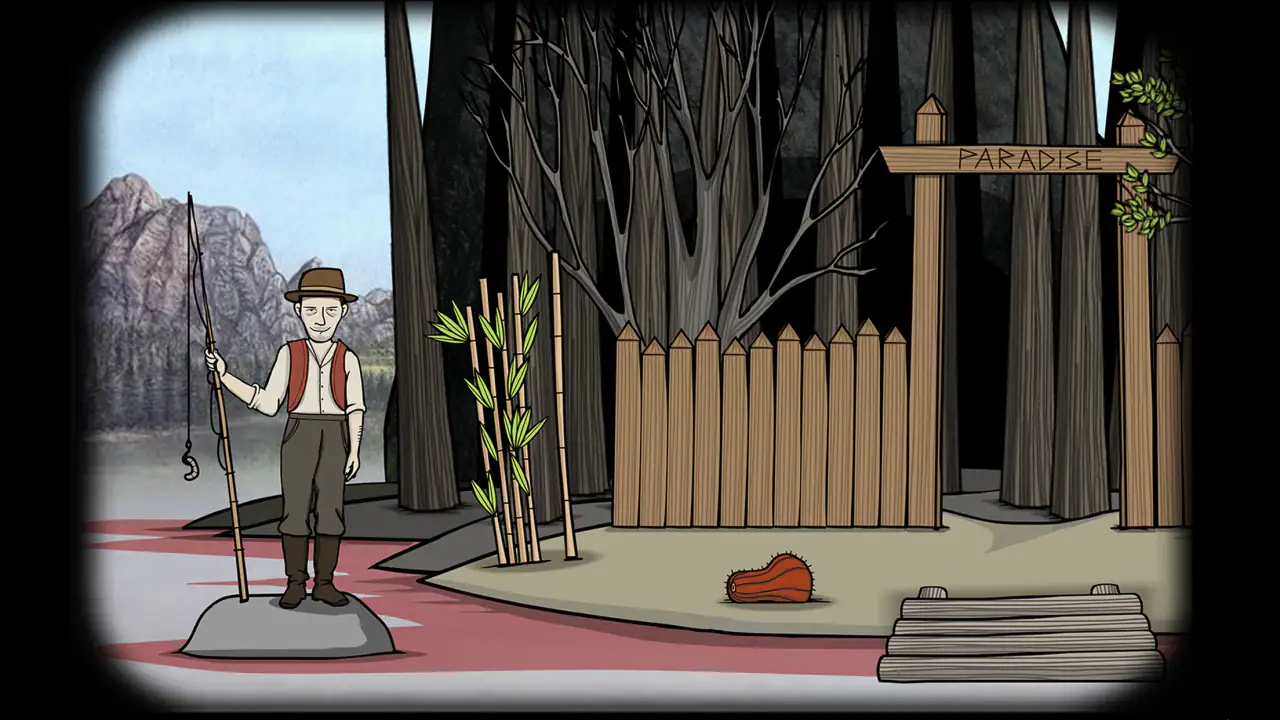
The store summary describes the objective as solving all the plagues, but that phrase should not make you expect a straightforward checklist. The game presents its problems through exploration and unusual interactions. I spent much of my time asking what an object meant in context, rather than simply searching for the next obvious key. That interpretive layer is where the game feels most distinctive.
It is a paid title at $2.99, which changes the way I judge it. I expect a focused experience rather than an endless platform for repeated purchases, and the upfront price makes it easier to recommend to someone who dislikes aggressive monetization. The trade-off is that you should be confident that eerie point-and-click puzzles are your style before buying. A player looking for a free, casual time-killer may prefer to start elsewhere.
The game is marked for Teen audiences. In a shared household, I would treat that as a conversation starter rather than a guarantee that every teenager will enjoy it. Some players are comfortable with unsettling themes, while others find the imagery unpleasant even if they regularly play games with more action. I would preview the tone personally before introducing it to a younger member of the household, especially if the device is used by several age groups.
On Android, the listed minimum operating system is Android 6.0, so the compatibility requirement is not aimed only at recent phones. Still, compatibility is only the first practical question. The screen size matters more than I expected: small objects and visual relationships are easier to inspect on a larger display, while a phone makes the experience more private and convenient. For shared play, a tablet or a phone placed between two people is more comfortable than passing a small handset back and forth.
Setting boundaries on a family or shared device
I would install this on a shared device only after deciding who is allowed to use the purchase and who is comfortable with the subject matter. The game itself is simple to launch, but the household decision is not simply technical. A child might see someone else playing and assume that the same content is suitable for them, so adults should make the age decision deliberately rather than relying on the fact that the controls look harmless.
There is also a practical boundary between watching and playing. A younger person might enjoy helping to spot colors, shapes, or objects without being ready for the darker parts of the story. That can work if an adult remains present and is willing to stop. I would not use the game as an unsupervised activity for children merely because it is a puzzle adventure.
For adults sharing one device, the main boundary is progress. A player who taps ahead alone can unintentionally change the experience for everyone else, particularly when a discovery would have been more satisfying if the group had discussed it first. I recommend agreeing on a simple rule: whoever is playing should announce when they are about to test a major idea, and anyone who wants to solve it independently gets a chance to speak before the action happens.
That rule is useful even when the device belongs to one person. Point-and-click games can feel personal because progress is often tied to the player’s sequence of discoveries. If several people use the same device, a little coordination prevents one person from becoming confused by another person’s unfinished line of thought. I would also avoid opening the game during a rushed moment, because hurried tapping encourages random experimentation and makes it harder to remember what each clue was supposed to suggest.
Coordinating clues without turning the game into a walkthrough
The most effective note-taking method I found was to separate observations from theories. Write down what is visibly present first, then list possible connections underneath it. For example, record the object, its location, and any unusual response before deciding what it must do. This is more useful than writing a guess as if it were a fact, because the game often encourages assumptions that later need to be revised.
In a shared session, I would give each player a specific responsibility. One person can remember locations, another can track items, and a third, if present, can challenge assumptions. These roles are not built-in features; they are simply a good way to keep conversation organized. They are especially helpful when the group has reached a puzzle that seems to have several possible interpretations.
When someone is stuck, I prefer a graduated hint system. First ask which locations have been checked. Then ask what has changed since the last discovery. Only after that would I point toward a particular object. This keeps the player involved and avoids the common problem where a complete online solution turns the rest of the game into a sequence of instructions.
That said, there are moments when outside help is sensible. A puzzle can become less enjoyable when you have exhausted every reasonable interpretation and are repeating the same taps. If you use a walkthrough, I suggest looking for the smallest hint that gets you moving again rather than reading the whole solution. On a shared device, this matters even more: one person’s quick search can remove the mystery for everyone else.
Another useful habit is to stop at a natural point instead of forcing a full session. The game’s strange atmosphere is more effective when I am attentive, but less enjoyable when I am tired and clicking without thinking. Saving the next puzzle for another evening also gives different household members a chance to participate. A short pause can be better than solving everything in one sitting and remembering only the final answer.
Age, trust, and the tone of the mystery
The Teen rating should shape how I recommend this game. The concern is not difficult controls or advanced gaming skill; it is the unsettling presentation and the way the story uses disturbing ideas. A teenager who likes dark mysteries may find that atmosphere compelling, while a younger child or sensitive player may find the same scenes stressful.
I would explain the tone before starting rather than presenting it as a surprise. Saying that the game is strange, eerie, and sometimes uncomfortable gives another player a fair choice. In a family setting, trust matters more than persuading someone to continue. If a player wants to stop, I would stop the shared session rather than insisting that the next puzzle will make the mood better.
It is also worth separating “teen-friendly” from “appropriate for every teen.” Age labels are useful boundaries, but they cannot account for individual sensitivity. I would be more comfortable recommending it to a teenager who already enjoys atmospheric mystery games than to a child who primarily plays bright, forgiving puzzle apps.
For adults, the darker tone is one of the strongest reasons to choose this title over a conventional hidden-object game. It creates curiosity and gives the puzzles a sense of purpose. The limitation is that the atmosphere can make casual play less relaxing. If you want something soothing to play while half-watching television, this is probably a poor match; the visual details deserve attention, and the mood may be too intense for background play.
How it compares with familiar adventure alternatives
Compared with action-adventure games, this is much more deliberate. You do not need quick reactions, precise movement, or a large inventory of controls. That makes it a better choice for a calm shared session, for a player who prefers thinking to combat, or for someone using an older compatible device. The cost of that simplicity is pace: players who need constant movement may find the investigation slow.
Compared with ordinary hidden-object games, the appeal is less about finding every item on a crowded screen and more about understanding why an item matters. The setting and symbolism give the search a stranger personality. If you enjoy tapping through familiar scenes for obvious collectibles, the game may feel less immediately comfortable because its clues are not always presented in the most direct way.
It also differs from large story-driven adventures that guide players through broad maps and long conversations. Rusty Lake Paradise feels more concentrated and self-contained in its puzzle language. That focus is convenient for household play because a second person can join without needing hours of backstory. On the other hand, players who want character customization, open exploration, or a large social system should choose a different kind of adventure.
The reported audience response is strong, with an average rating of 4.8 from around 10K ratings, and the game has passed 100K installs. I take that as useful evidence that its unusual style connects with many players, but not as proof that it will suit everyone. A high rating cannot remove the central trade-off: the same surreal darkness that attracts fans may be exactly what turns away players seeking a light puzzle experience.
Performance, version, and everyday practicality
The current version is 3.1.6, and the listed release date is Jan 11, 2018. Those details place the game in a mature part of its life rather than presenting it as a brand-new release. I like that context because it sets a realistic expectation: I am choosing an established puzzle adventure with a settled identity, not an evolving service that depends on frequent new content.
For everyday use, I would keep the device charged and play with a stable grip, especially if two people are looking at the screen. The game is not suited to being played while walking or during a crowded commute because the important information is visual and the interaction benefits from concentration. A quiet waiting room or a relaxed evening at home is a much better setting than a noisy journey.
Shared-device users should also decide whether they want one continuous group experience or separate personal progress. I prefer one person to lead while the others advise, because repeatedly restarting the same section can make the discussion messy. If different people want to solve independently, they should agree in advance on how they will avoid spoiling each other’s discoveries.
The app’s simplicity makes it approachable, but it does not make every puzzle immediately understandable. That is an important distinction for people choosing it for children or casual players. I would describe the installation and controls as accessible, while describing the reasoning as deliberately unusual. Someone can learn how to play in moments and still need considerable patience to solve a particular sequence.
Who should choose it and who should skip it
I would recommend it to fans of atmospheric point-and-click adventures, players who enjoy discussing theories, and households looking for a game that two people can solve together on one screen. It is also a good fit for someone who wants a paid experience without the feeling of an endless competitive grind. The strongest audience is comfortable with ambiguity and enjoys noticing details that do not announce their importance immediately.
I would be cautious about recommending it to players who dislike disturbing imagery, want a cheerful family game, or need clear instructions at every step. I would also skip it for a group that prefers fast multiplayer action. The game’s value comes from attention and interpretation, so it can feel frustrating when everyone is talking over one another or when one player is rushing to finish.
For a teenager and an adult, it can be a thoughtful shared activity if both are comfortable with the tone. For younger children, I would make the decision case by case and stay involved. For a solo adult player, it works well when you want a mystery that rewards patience rather than a game that fills every spare minute with stimulation.
My final household verdict is favorable, with one clear condition: choose it for its eerie puzzle atmosphere, not because its simple controls make it automatically suitable for everyone. Rusty Lake Paradise is at its best when players slow down, compare observations, and protect one another’s discoveries. The $2.99 price feels reasonable for that focused experience, and Rusty Lake’s distinctive style gives it more personality than a routine puzzle app.
After spending time with it, I would install it on a shared device for an adult-led or teen-and-adult session, establish the age boundary first, and agree on a no-spoiler rhythm before beginning. I would not choose it as background entertainment or as a universal children’s recommendation. For the right household, though, it turns a phone or tablet into a small mystery table where careful looking and conversation matter as much as tapping.
FAQs for Rusty Lake Paradise
What is Rusty Lake Paradise about?
Rusty Lake Paradise is a story-driven point-and-click adventure game set on a mysterious island inspired by the biblical Ten Plagues of Egypt. You play as Jakob Eilander, who returns to his family’s island after his mother’s death and discovers disturbing secrets. The game combines surreal storytelling, hand-drawn artwork, atmospheric music, exploration, and puzzle-solving in a strange but memorable world.
How does the gameplay work in Rusty Lake Paradise?
The game focuses on exploring different locations, examining objects, collecting items, and solving environmental puzzles. You interact with family members and unusual objects to uncover clues and progress through the story. The puzzles vary in difficulty and often require careful observation, combining items, remembering symbols, and understanding the game’s bizarre logic rather than relying on traditional action or combat.
Is Rusty Lake Paradise suitable for beginners?
Rusty Lake Paradise is accessible to players who enjoy casual adventure games, but some puzzles can be challenging because the solutions are intentionally unusual and the clues are sometimes subtle. There is no time pressure or fast reflex requirement, so beginners can take their time exploring. Players who prefer straightforward instructions may occasionally need hints or outside guidance.
Does Rusty Lake Paradise work offline, and what devices support it?
Rusty Lake Paradise is primarily a single-player adventure designed for mobile play and can generally be enjoyed without a constant internet connection after installation. Availability and compatibility may vary depending on your Android or iOS version, device model, and store region. Before downloading, check the official store listing for current system requirements, file size, and supported devices.
Does Rusty Lake Paradise contain ads or in-app purchases?
Rusty Lake Paradise is presented as a premium game rather than a free-to-play title built around frequent advertisements or energy systems. The main purchase typically provides access to the complete adventure, although pricing can vary between Android, iOS, and different regions. It is still worth checking the current store page before downloading, especially during discounts or platform-specific promotions.
Pros
- Surreal atmosphere creates a memorable mystery adventure.
- Hand-drawn visuals give every scene a distinctive personality.
- Puzzles are varied enough to keep progression engaging.
- Short chapters make it easy to play in brief sessions.
- The eerie soundtrack strengthens the game’s unsettling mood.
Cons
- Some puzzle solutions feel obscure without careful experimentation.
- The dark themes may not appeal to younger players.
- Limited guidance can lead to occasional frustrating dead ends.
- The story relies on symbolism that may confuse some players.
- It is a paid experience with little replay value after completion.


